
‘Runners knee’ is a common injury causing pain at the front of the knee or around the kneecap (patella), often medically referred to as ‘Patellofemoral Pain’(PFP). Sometimes this term can also be used to describe another running injury known as Iliotibial Band Friction Syndrome (ITBFS), though this presents as pain on the outside (or the lateral area) of the knee. Both conditions are common in running populations and can be hard to get ahead of if left for too long!
PFP is often characterised by pain behind or around the patella with weight bearing activity or loaded flexion movements of the knee. This sadly means you do not have to be a runner to get PFP as we can experience it during squatting, lunging, stair climbing/descending, walking, prolonged sitting (‘movie-goers knee’ is another fun name for this condition) and (obviously) running.

Due to PFPs complex and varied nature and the vast work our knees do during exercise, the condition can develop in several differing ways.
Some of the more common factors that can lead to PFP are:
-Increased training loads or spikes (with running/gym work)
-Weakness/strength deficits of the knee (Quadriceps) or hip (Gluteus Maximus/Medius)
-Poor biomechanical (movement) patterns and/or poor running technique
All of which can contribute to increased work placed upon the patellofemoral joint, leading to pain.
Luckily, Runners knee can be managed well with good education, advice and exercise prescription from your physio. Initially, a focus on the reduction of pain or other symptoms with activity modification and treatment (massage and taping) can help to get things going in the right direction.
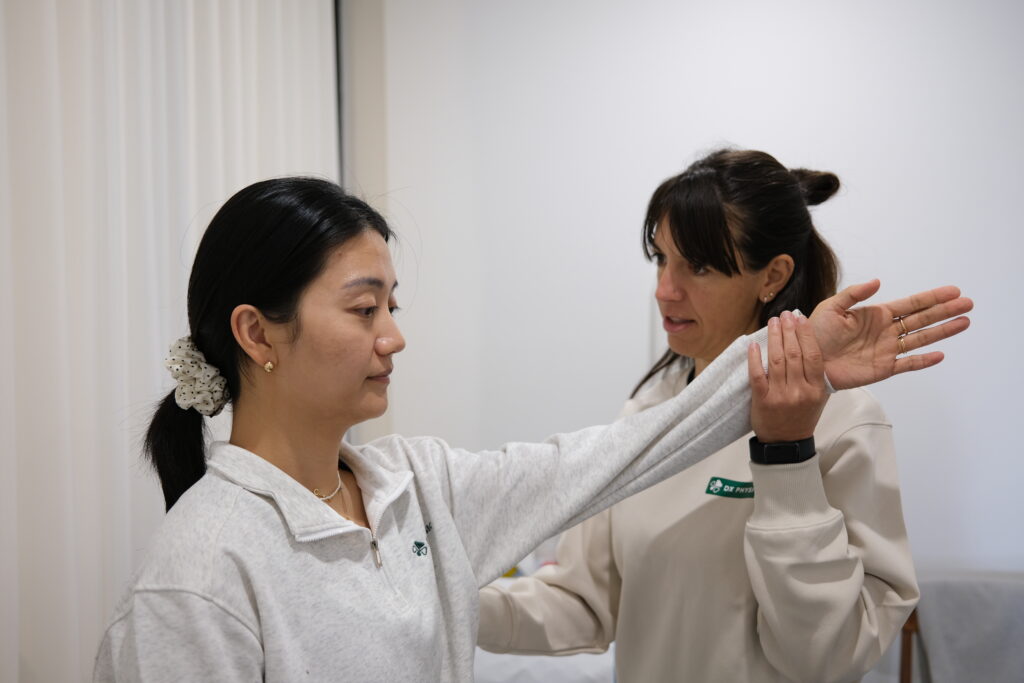
Your physiotherapist can then assess your movement patterns to decide if there is need for retraining any of these to unload the patellofemoral joint, along with assessing the strength around the hip and knee to help target your exercise rehab to where it is needed most! The combination of hands-on treatment, taping, strength training and load management fills out the staples of treatment for PFP in the early to mid-stages prior to returning to running or lifting heavy in the gym. From there, a specific strength and conditioning program and/or running program (+/- technique correction work if relevant) can aid the later stages of your recovery as you begin to outrun your ‘Runners knee’!
At DX PHYSIO, our sports physio Joshua is very experienced at treating all kinds of knee conditions. If you are suffering from knee pain or any sports injuries, please give us a call today at 0299493770.