
Many breastfeeding mothers eventually face the same painful question: “Should I use heat or cold compress for mastitis?” At first, this seems like a small problem, something you can fix with a simple home remedy. But when your breast becomes swollen, red, or hot, this question suddenly feels much bigger. Mastitis brings discomfort that can change the whole rhythm of your day. You may feel a sharp pain when your baby latches. You may feel a deep ache that spreads into your armpit. Feeding becomes stressful because the milk does not flow as smoothly. You may also notice chills or a warm fever-like sensation, which makes the experience even harder to manage.
This confusion is common. Many mothers receive different advice from friends, online groups, or even social media. Some say warm showers help. Others say cold packs are the only safe choice. The conflicting messages often increase anxiety, especially when you are tired and in pain. Because mastitis symptoms can change quickly, mothers often feel unsure about how to respond at each stage.
This article aims to give you a clear and simple guide. It explains the difference between heat and cold and shows when each method is helpful or not. You will also learn how to recognise the point where home remedies are no longer enough and when professional support, such as therapeutic ultrasound, becomes important for deeper blockages. Breastfeeding is already a demanding journey, and you deserve care that feels gentle, safe, and effective. By the end of this article, you will feel more confident and supported in looking after your body.
Heat vs. Cold Compress — What’s the Difference?
Heat and cold each play a role in mastitis care, but they are used for very different purposes. When you understand what each one does inside the breast, it becomes much easier to choose the right method at the right time.
Warm compress helps the breast prepare for feeding. Heat opens the blood vessels and improves circulation. This increase in blood flow softens firm tissue and loosens thick milk that may be sitting in the ducts. For many mothers, using a warm compress before breastfeeding or pumping makes the breast feel more relaxed. The milk often begins to move more easily, and the pressure inside the breast decreases. A warm shower, a warm towel, or a gentle heat pack can all provide this benefit.
However, heat is not always suitable. When the breast is already red, swollen, and inflamed, too much heat may draw more fluid into the area. This can lead to more swelling and more pain. In this situation, heat stops being helpful. Instead, it slows down recovery. A simple and clear rule is: Use heat before feeding, but avoid excessive heat if the breast is very inflamed.

Cold compress works differently. Cold tightens the blood vessels and reduces the amount of swelling in the tissue. This calming effect helps your breast feel less hot and painful. Cold is best used after breastfeeding or pumping. When the breast is irritated, cold packs help cool the skin and reduce inflammation. Many mothers say cold packs bring fast relief during the peak of mastitis discomfort.
Cold is excellent for pain and swelling, but it cannot open a blocked duct. It does not soften milk or improve milk flow. Its purpose is comfort, not treatment. Therefore, heat helps movement, cold helps inflammation. Both have their place, but neither is the full solution when the blockage is deep or long-lasting.
Sometimes it helps to think of them this way:
- Before feeding: Warmth to help milk move.
- After feeding: Cold to calm the breast.
Both are tools. They help your comfort, but they do not solve the core issue when milk is stuck.
When Simple Home Care Isn’t Enough — How Ultrasound Therapy Helps
There are moments when warm and cold compresses work well. But there are also moments when these methods are simply not enough. When you feel a firm lump that does not change after several feeds, or when the pain continues for hours, the blockage is likely deeper. If the inflammation grows stronger or you begin to feel chills, you may be entering a more serious stage of mastitis.

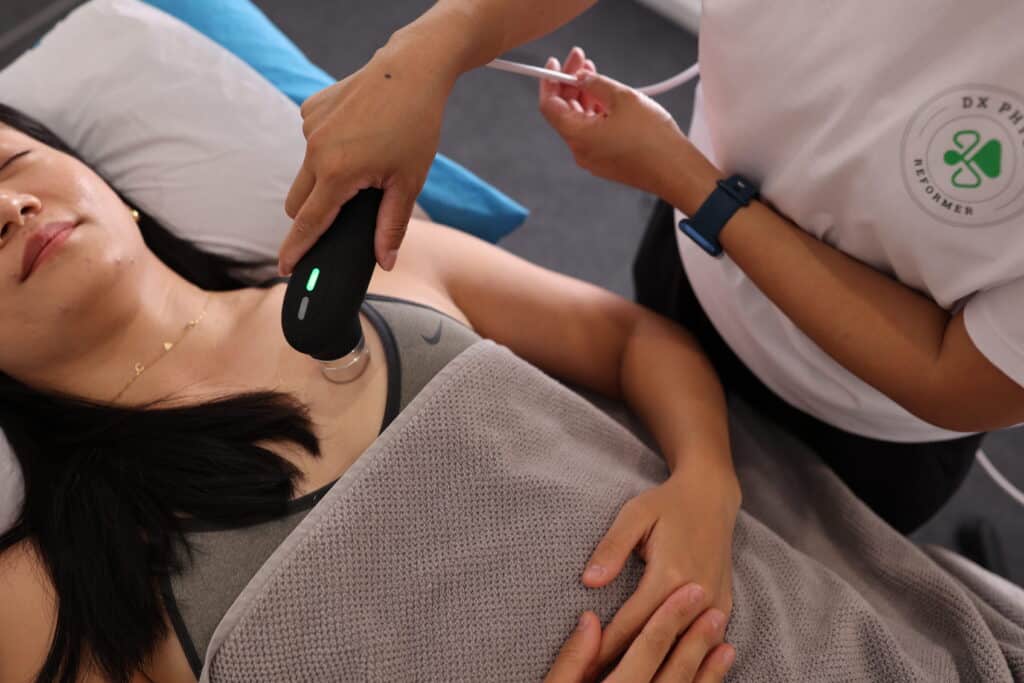
This is where therapeutic ultrasound becomes a strong and effective support. Therapeutic ultrasound is a safe, gentle, and non-invasive treatment provided by women’s health physiotherapists. It uses sound waves that penetrate deep into the breast tissue. You cannot hear these waves, but your tissue responds to them. The waves produce micro-vibrations that help loosen thick milk and soften blockages. They also improve circulation and reduce inflammation.
The blocked duct often sits deeper than you expect. Heat packs only warm the surface. But ultrasound reaches into the exact depth of the blockage. This is why many mothers feel relief after just one or two sessions. The pressure decreases, the swelling softens, and milk begins to move again. Once the milk flows, the body can naturally resolve much of the inflammation.
Ultrasound also differs from home heat because it is controlled. A physio adjusts the strength, depth, and duration based on your symptoms. This makes the treatment safe and highly targeted. It is not random warmth or guesswork. This method is supported by research and is widely used in mastitis care. Many physiotherapists rely on ultrasound to treat blocked ducts and other breastfeeding-related pain because it works gently and effectively.
At DX Physio Balgowlah, the Ultrasound Therapy for Mastitis service is tailored to breastfeeding mothers. The settings are gentle yet effective. The treatment is comfortable, and many mothers feel improvement even before they leave the clinic. If you feel stuck lumps, strong swelling, or painful feeding despite using heat and cold properly, ultrasound treatment is an important next step.

Conclusion
Heat and cold compresses are useful and can bring relief to breastfeeding mothers dealing with mastitis. Heat before feeding helps soften the breast and assist milk flow. Cold after feeding helps reduce swelling and calm the breast. Both methods can improve comfort, but neither one is a complete treatment when the blockage is deep or when inflammation continues to grow.
If pain keeps returning, if a lump stays for many hours, or if breastfeeding becomes too painful, it is time to seek professional help. Therapeutic ultrasound can soften blockages, reduce inflammation, and help milk flow again. Early treatment prevents complications and protects your breastfeeding journey. You deserve support, comfort, and confidence while feeding your baby.