Breastfeeding is a beautiful and rewarding experience, but it can also bring unexpected challenges. One of the most common issues mothers face is mastitis, a painful inflammation of breast tissue. It can cause redness, swelling, and tenderness, and sometimes comes with fever or fatigue. Mastitis usually occurs when milk ducts become blocked, causing milk to build up and irritate surrounding tissue.
While many cases can improve with simple home care — such as frequent feeding, rest, gentle massage, and staying hydrated — some situations need extra help. That’s where ultrasound therapy for mastitis can play an important role. This gentle, non-invasive physiotherapy technique uses sound waves to reduce inflammation, ease pain, and help restore natural milk flow.
When performed by a qualified physiotherapist, ultrasound therapy can support healing and comfort. However, if you experience high fever, chills, or persistent pain, you should seek medical attention promptly, as these could be signs of infection or abscess formation.
What Is Ultrasound Therapy for Mastitis?
Ultrasound therapy for mastitis is a therapeutic physiotherapy method that uses high-frequency sound waves to treat inflamed or congested breast tissue. These sound waves generate gentle vibrations and warmth deep within the breast, improving circulation and helping the body recover naturally. Unlike imaging ultrasounds used during pregnancy, this is therapeutic ultrasound — designed for healing, not imaging.
When mastitis develops, milk ducts can become narrowed or blocked, leading to swelling and discomfort. The affected breast may feel firm, hot, or tender to the touch. By improving blood flow and reducing tissue stiffness, ultrasound therapy helps soften the blockage and relieve pain.

You may consider ultrasound therapy if you experience:
- Recurring blocked ducts that don’t resolve with home care.
- Localised pain or lumpiness that interferes with feeding.
- Early inflammation or swelling that needs targeted relief.
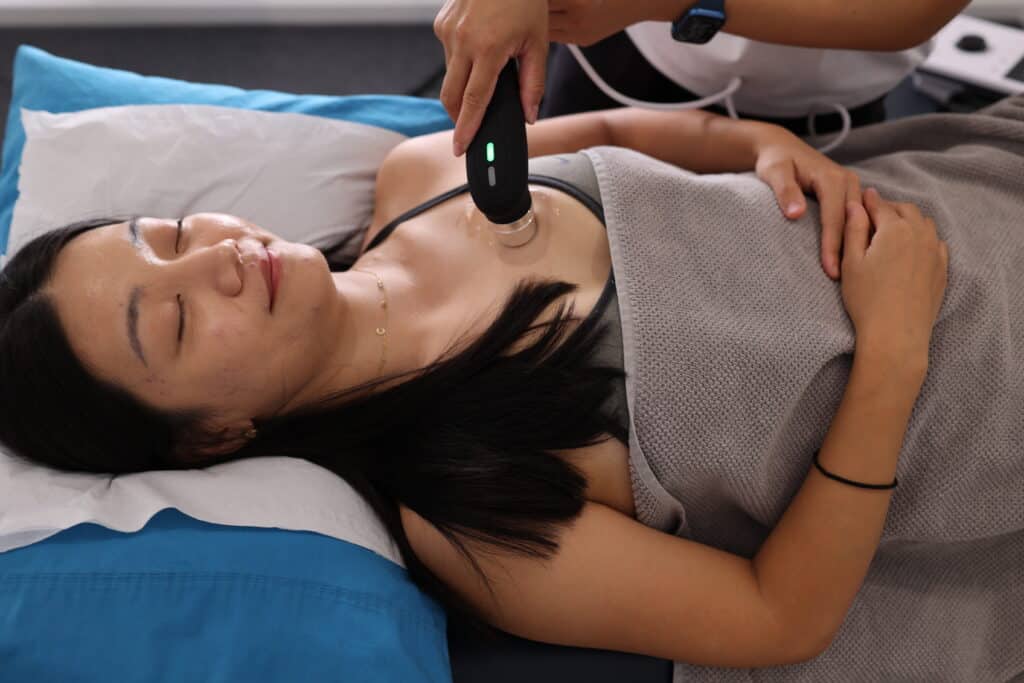
The treatment is short, safe, and comfortable. A handheld probe is applied to the affected area with a conductive gel that helps transmit sound waves. Most mothers describe it as a warm, soothing feeling — not painful.
At DX Physio, our experienced physiotherapists provide personalised treatment plans for women dealing with mastitis, blocked ducts, or breastfeeding-related pain. We combine ultrasound therapy with gentle manual care and education to help mothers recover quickly and safely.
How Does It Help?
Ultrasound therapy helps manage mastitis through both mechanical and thermal effects that promote healing and comfort.
1. Improves blood flow
The vibration from ultrasound waves enhances local circulation, bringing oxygen and nutrients to the inflamed area. Improved blood flow helps the tissue repair itself more effectively.
2. Reduces inflammation and swelling
When fluid builds up in the breast tissue, it creates pressure and discomfort. Ultrasound therapy helps the lymphatic system drain excess fluid, reducing swelling and tenderness.
3. Softens thickened breast milk and blockages
The gentle warmth produced by ultrasound can help soften thickened breast milk and loosen ductal blockages. Once the tissue relaxes, milk can flow more freely, which often relieves pressure and pain.
4. Relieves pain and tension
The warmth relaxes tight muscles and eases the soreness that comes with inflammation, helping mothers feed more comfortably.

5. Supports recovery and prevents recurrence
By improving milk drainage and reducing tissue congestion, ultrasound therapy lowers the risk of future blockages and encourages a smoother breastfeeding experience.
Most mothers start to feel improvement after a few sessions. The exact number and frequency of treatments depend on your symptoms and how your body responds. According to the Academy of Breastfeeding Medicine Protocol #36, therapeutic ultrasound can be considered as a supportive physiotherapy option for inflammatory breast conditions, but routine daily use before symptoms improve is not recommended. Instead, session frequency should be determined by a qualified physiotherapist based on individual progress.
When used appropriately, ultrasound therapy can effectively relieve inflammation, restore comfort, and help mothers continue breastfeeding confidently.
What to Expect During Treatment
Before beginning ultrasound therapy for mastitis, your physiotherapist will carry out an assessment. They will review your symptoms, feeding routine, and medical history to ensure treatment is safe and appropriate.
A typical treatment session includes:
- Assessment: The physiotherapist examines the affected area, identifies blockages, and rules out signs of infection or abscess.
- Preparation: A small amount of gel is applied to help the sound waves travel smoothly through the skin.
- Application: The ultrasound probe is moved gently over the sore area in circular motions for about five minutes. The sensation is warm, gentle, and relaxing.
- Frequency: According to the Academy of Breastfeeding Medicine, therapeutic ultrasound can be used as an adjunct to physiotherapy care, but it should not be applied on a strict daily basis before symptom improvement. The frequency and duration are best adjusted individually by the physiotherapist based on clinical response.
- Aftercare: You can breastfeed or express milk immediately after treatment. Many mothers find that milk flows more easily after therapy, as the tissue feels softer and less swollen.

The treatment itself is painless, and most mothers report immediate comfort after a session. Some may notice mild warmth or temporary tenderness, which typically fades within a few hours.
You should seek medical help if:
- You develop a high fever or chills.
- Redness or hardness spreads rapidly.
- Pain worsens despite treatment.
- There is no improvement after several sessions.
At DX Physio, our physiotherapists design a Personalised Treatment Plan for each client. We focus on gentle, evidence-based care to relieve pain, restore function, and support your breastfeeding goals safely.
Conclusion
Mastitis can be both physically painful and emotionally draining, but it doesn’t have to stop your breastfeeding journey. Ultrasound therapy for mastitis offers a safe and gentle way to ease inflammation, improve circulation, and help unblock milk ducts.
When used as part of a broader physiotherapy plan — which may include self-care education, warm compresses, proper feeding positioning, and rest — ultrasound therapy can help you recover more comfortably and quickly.

It’s important to remember that every case of mastitis is different. What works for one mother may not work for another. Consulting a qualified physiotherapist ensures that your treatment is safe, effective, and tailored to your needs.
With professional support, most mothers experience relief within a few sessions and can return to pain-free breastfeeding. Early intervention and personalised care make a big difference — both for your comfort and your confidence.