
Recognising the Signs of a Clogged Milk Duct
Breastfeeding can be one of the most special parts of motherhood. It creates a bond, brings comfort to your baby, and gives you a sense of connection. But sometimes, things do not go as smoothly as you expect. One of the most common challenges mothers face is a clogged milk duct.
A clogged duct happens when milk cannot flow freely through part of the breast. It may occur after long feeding gaps, tight clothing, stress, or poor latch. When milk stays trapped, it thickens and blocks the duct.
You might notice a firm, sore lump on one breast. The area can feel warm, swollen, or tender when touched. The skin over it may look slightly red, and you might feel discomfort that grows before feeding. Some mothers say it feels like a small marble under the skin.
Even after feeding or pumping, the breast can still feel heavy or full. Milk flow might be slower on the affected side. In some cases, you may even see less milk when you pump.

The good news is that a blocked duct is common and usually temporary. It does not always mean infection, but if ignored, it can develop into inflammation or mastitis. Recognising it early is key. With gentle care, early feeding, and the right support, most blockages clear quickly.
If you notice these signs, do not panic. It is your body’s signal to rest, feed often, and take care before the discomfort grows worse.
Why Physiotherapists Use Ultrasound in Blocked Duct Care
When milk becomes thick or a duct is squeezed by tight clothing or pressure, flow slows down. This creates a painful buildup that needs attention. Many mothers try warm compresses or massage at home. These can help, but sometimes the blockage is deeper and needs more than surface heat or manual pressure.
This is where ultrasound for clogged milk duct can help. Therapeutic ultrasound is a safe, non-invasive treatment that uses high-frequency sound waves. These sound waves create gentle vibrations that reach deep into the breast tissue.

This vibration helps to:
- Soften thickened milk so it can pass through the duct.
- Improve blood flow and lymph drainage, reducing swelling and inflammation.
- Ease pain by relaxing tissue and decreasing pressure.
- Support natural healing so the breast can recover without medication.
Most mothers describe the treatment as gentle and soothing, not painful. The process encourages your body to restore normal milk flow naturally.
Ultrasound is not a replacement for feeding or pumping. Instead, it works together with these activities to speed recovery. It helps your body release milk more easily and prevents the problem from returning.
At DX PHYSIO, women’s health physiotherapists provide this therapy as part of postnatal care, using ultrasound to support mothers in a safe and gentle way.
What to Expect During Ultrasound Therapy
If you have never had ultrasound therapy before, you may feel unsure of what will happen. The process is simple, comfortable, and designed to help you relax.
Your physiotherapist will start with a brief assessment. They will ask when your pain began, how often you breastfeed or pump, and where you feel the lump. This helps them plan treatment for your specific needs.
If you have a fever or notice spreading redness, the physiotherapist may suggest seeing a doctor first. Otherwise, the ultrasound session can begin right away.
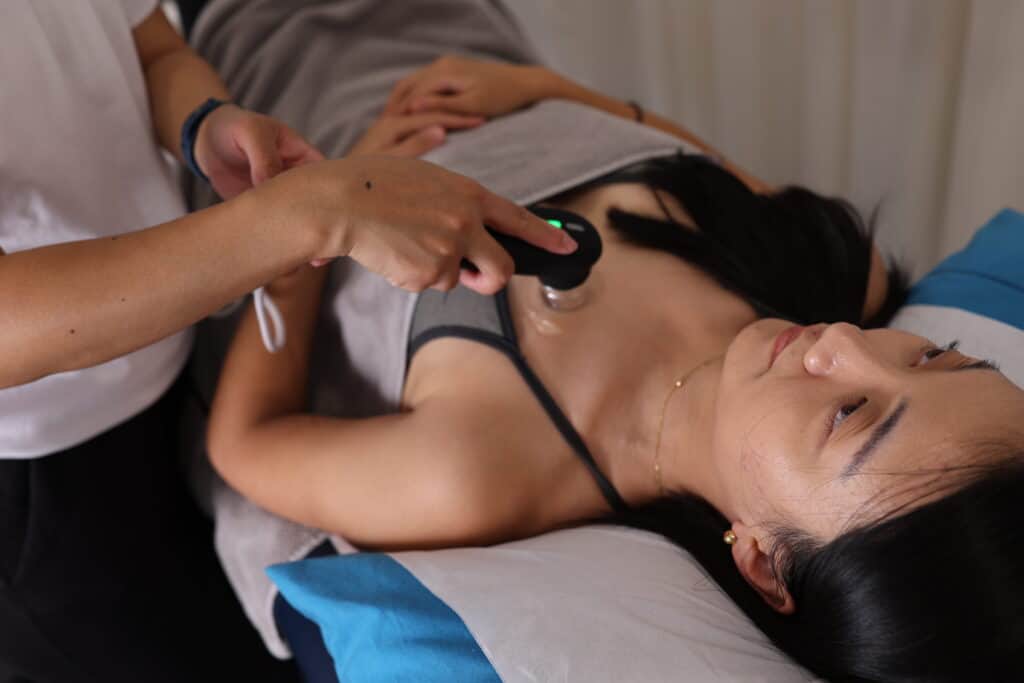
Each session lasts about 20 minutes. It includes both ultrasound therapy and gentle massage. A small amount of gel is applied to the skin so the probe can glide smoothly. The physiotherapist moves the probe in small circles over the sore area.

You may feel warmth under the skin. It should not be uncomfortable. The goal is to loosen the blockage and help the milk flow again. After the ultrasound, a gentle massage supports further drainage and comfort.
Many mothers notice that their breast feels softer and lighter afterward. Some find that milk flows more freely during the next feeding or pumping session.
The number of sessions depends on your symptoms. Most women need one to three visits. Your physiotherapist will suggest what works best for you.
This approach focuses on natural recovery. It is gentle, calm, and safe for breastfeeding mothers. It helps you heal while continuing to feed your baby with confidence.
Home Support and Prevention Tips
Ultrasound treatment can give fast relief, but ongoing care at home keeps the results lasting longer. With a few simple habits, you can reduce the risk of getting blocked ducts again.
1. Feed or pump frequently.
Do not skip feeds or let your breasts stay full for too long. Frequent milk removal keeps ducts clear.
2. Change feeding positions.
Try different positions so every part of the breast drains well. Feeding your baby’s chin toward the sore area can help clear that spot.

3. Avoid tight bras and clothes.
Underwire bras or firm straps can press on ducts and cause blockage. Choose soft, breathable materials.
4. Rest and hydrate.
Healing takes energy. Drink water often and rest whenever you can. Even short naps help your body recover.
5. Gentle warmth and massage.
Before feeding, use a warm compress or shower to relax your breast. Massage gently in small circles toward the nipple. Do not press too hard, as this may worsen swelling.
6. Watch for early warning signs.
If you feel a lump, tenderness, or notice less milk flow, act early. Feed more often, use warmth, and contact a physiotherapist if it does not improve within a day or two.
Prevention is easier than treatment. Combining good habits with early support can help you enjoy a more comfortable breastfeeding experience.
When to Seek Professional Help
Most blockages clear within a few days, but sometimes professional help is needed. Seek medical care if you have:
- Fever or chills.
- Redness spreading over the breast.
- A lump that remains hard or painful after several days.
- Increasing pain despite care.
- Pus or blood in your milk.

These could mean infection or abscess, which needs a doctor’s attention. Early treatment prevents complications and speeds recovery.
If your symptoms are mild but stubborn, physiotherapy can still make a big difference. Ultrasound therapy helps reduce inflammation, ease pain, and clear milk flow safely. It is gentle, drug-free, and works alongside other care, including antibiotics when needed.
At DX PHYSIO, sessions are available at both Cremorne and Balgowlah clinics, each performed by women’s health physiotherapists who specialise in postnatal recovery.
Conclusion
Blocked ducts can cause pain and worry, but they are not a reason to stop breastfeeding. Most can be managed with early action and gentle care.
Recognising the warning signs — a lump, soreness, or reduced milk flow — helps you act quickly before inflammation develops. Continue feeding often, rest, stay hydrated, and avoid tight clothing.
When home care is not enough, therapeutic ultrasound offers safe and effective support. The warmth and vibration help loosen the blockage, improve circulation, and relieve pain. Combined with proper feeding and self-care, it helps your body return to balance.
With calm attention and the right guidance, breastfeeding can feel comfortable again. Early help brings faster recovery — and more peaceful moments with your baby.